0
comments
Saturday, 2 April 2011
0
comments
Saturday, 2 April 2011
0
comments
Saturday, 2 April 2011
0
comments
Saturday, 2 April 2011
 0
comments
Sunday, 6 March 2011
0
comments
Sunday, 6 March 2011
 Dr. Alessandro Farinelli
Visiting Researcher, School of Electronics and Computer Science
University of Southampton
http://www.ecs.soton.ac.uk/people/af2
Alessandro Farinelli received his PhD in Computer Engineering at Dipartimento di Informatica e Sistemistica, University of Rome "La Sapienza" in 2005, under the supervision of Prof. Daniele Nardi. After that he was a Post-Doc at University of Rome "La Sapienza" working on the project "An integrated framework for situation assessment and task assignment in real rescue scenarios". He is now working as a Research Fellow with Prof. Jennings in the area of decentralised control.
0
comments
Wednesday, 2 February 2011
While blogspot is updated sporadically, Facebook is where Academic Beards is at.
0
comments
Tuesday, 1 February 2011

Brian Casemore is an Assistant Professor of Curriculum & Pedagogy in the Department of Curriculum & Pedagogy at the George Washington University’s Graduate School of Education and Human Development. He teaches courses in English education, curriculum theory, human development, and social diversity. His research focuses on autobiographical inquiry and psychoanalytic conceptions of educational experience. His book on southern place and identity, The Autobiographical Demand of Place: Curriculum Inquiry In the American South (Peter Lang, 2008), explores the role of place in self-formation and conceptualizes a southern studies curriculum rooted in southern literature and autobiographical inquiry. In his current research, Brian is investigating the emotional geography of conversations in sex education. He is the principal investigator for a Ford Foundation Research Grant, "Sex Education in the Age of Abstinence: Conversations Toward a Revitalized Curriculum." The purpose of this research is to investigate conversations among youth and educators about sexual health and to develop innovative and democratic sexuality education curricula.
http://gsehd.gwu.edu/index.php?c=1150&kat=profile&pid=a597e50502f5ff68e3e25b9114205d4a
http://gsehd.gwu.edu/index.php?c=1150&kat=profile&pid=a597e50502f5ff68e3e25b9114205d4a
0
comments

Thomas Bernauer is a professor of political science at ETH Zurich. He and his research group are based at the Center for Comparative and International Studies, a joint institution of ETH Zurich and the University of Zurich, and at ETH Zurich’s Institute for Environmental Decisions. Thomas Bernauer obtained his PhD from the University of Zurich in 1992. In 1988-92 he was a researcher at the United Nations Institute for Disarmament Research in Geneva, in 1992-94 a postdoctoral researcher at Harvard University, and in 1994-95 a senior lecturer at the University of Zurich. In 1995 he was appointed assistant professor at ETH Zurich, in 1999 associate professor, and 2004 full professor. In 2004-2006 Thomas Bernauer was dean of ETH Zurich’s department of social sciences and humanities, and in 2005-2009 director of the Center for Comparative and International Studies. Since 2004 he is a member of the Swiss National Science Foundation’s research council.
In his research and teaching Thomas Bernauer focuses on international environmental and economic issues. That is, he analyzes political and other conditions under which environmental and economic problems that extend beyond national borders can be solved. He is the author or co-author of ten books, more than 60 journal articles or book chapters, and many other types of publications. His publications have appeared with publishers such as Princeton University Press as well as in political science, economics, and natural sciences journals, for example International Organization, British Journal of Political Science, European Journal of Political Research, Ecological Economics, World Development, and Water Resources Research.
0
comments
Saturday, 8 January 2011

Dr Nico van der Heiden
Senior Research Fellow, Project Manager
Department for Political Science
University of Zurich
http://www.ipz.uzh.ch/institut/mitarbeitende/staff/vanderheiden_en.html
Senior Research Fellow, Project Manager
Department for Political Science
University of Zurich
Nico van der Heiden studied political science, economics and media science at the University of Zurich (M.A. 2005). From 2002 until 2005 he was a student assistant at the Institute for Political Science at the University of Zurich (chair for Swiss politics and unit for policy-analysis and evaluation). Subsequently he was a research and teaching assistant at the same institute (2005-2008). In 2005, he was accepted to participate in the doctoral school of the NCCR democracy. His dissertation is on "Urban Foreign Policy and Domestic Dilemmas in Swiss and European City-regions" (Dr. des. 2009). A scholarship for promising junior scholars from the Swiss National Science Foundation allowed him to spend the academic year 2007/2008 at the INRS-UCS (Institut national de la recherché scientifique urbanisation, culture et société) in Montréal (Canada). Thereafter, he was academic assistant at the Seminar for Political Science at the University of Lucerne. Since February 2009, he is a senior project manager at the Centre for Democracy in Aarau.
http://www.ipz.uzh.ch/institut/mitarbeitende/staff/vanderheiden_en.html
0
comments
Tuesday, 28 December 2010
In free societies and tyrannies alike, the hair on, and around, a man’s head always sends an ideological signal.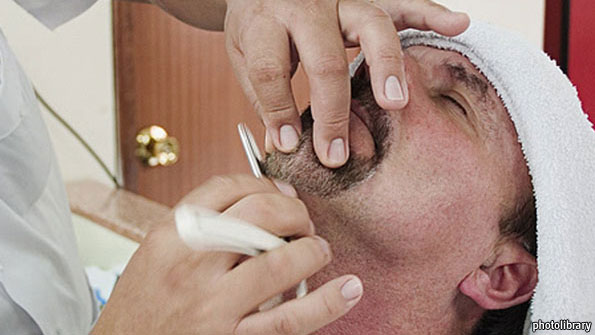
In many societies, beards and moustaches are even more ideologically charged than the question of what, if anything, sprouts from the top of male heads. Both in Muslim countries, and in the Muslim diaspora, sporting a bushy beard—often with the upper lip shaven—has become a symbol of piety. Many of the sternest Islamic regimes give men absolutely no choice in the matter. In June Somalia’s Islamic militants ordered men in Mogadishu to grow their beards and trim their moustaches. When the Taliban held power in Afghanistan, trimming one’s whiskers was outlawed; luxuriant beards flourished everywhere. Secular regimes that govern mainly Muslim populations often ban or strongly discourage beards. But when Saparmurat Niyazov, the late despot of Turkmenistan, ordered young men to shave their goatees, it was not so much an anti-religious measure as a general crackdown on personal freedom of all kinds. It was in a similar spirit that Enver Hoxha, Albania’s communist tyrant, outlawed beards (and almost every other show of individualism) in the 1970s.
One of the first changes decreed by the Islamists of Hamas after their victory over the secularists of Fatah in the 2006 Palestinian elections was that policemen were allowed to grow beards. But the theology of male hair can be controversial. Orthodox Christian priests generally sport beards in humble imitation of Jesus Christ; the most conservative say a priest’s hair and beard should not be cut because his whole body has been sanctified by the rite of ordination. Christian theologians still argue over what Saint Paul meant when he told the people of Corinth that for men to have long hair was shameful, while for women, flowing tresses were something glorious (although they should keep them covered, perhaps to avoid tempting wayward angels). Samson, one of the heroes of the Hebrew scriptures, seems to exemplify a different understanding of the power of hair: his awesome strength abandoned him as soon as his locks were trimmed.
For Muslims, imitating the faith’s founder is also given as a reason for growing beards. But there are many arguments over whether the practice is mandatory or just recommended. And the more beards are promoted in Islamic societies, the more unpopular they become in places that are wary of Islam—such as India, where a court opined last year that a Christian college was entitled to ban beards. To the dismay of Indian Muslims, the judge declared: “We do not want Talibans here.”
In Iran men can choose whether to shave or not, but Afro-sporting youths avoid beards because they would carry a hint of conformity with authority. And as Anthony Synnott, a British-born sociologist, points out, the only constant in the history of hairstyles is that each generation of men likes to defy its fathers (and father figures). In the 1960s both skinheads and hirsute hippies were challenging the uniformity of a generation that had received its formative haircuts while in uniform. Once every possible length had been tried, the only way to impress the world was through colour: rainbow-hued Mohawks, stripes and wings.
But in free societies, anything—however outrageous it seems at first—becomes respectable after a while. (Think how the body-piercing favoured by punk-rockers lost its power to shock after young bankers started sporting discreet earrings with their pinstriped suits.) One of the rising stars in Japanese politics is 58-year-old Yoshimi Watanabe, whose “Your Party” has just won 11 seats in the upper house of the legislature. Among his trademarks is a faux-hawk or “antenna” hairstyle, reportedly modelled on David Beckham’s appearance in 2002; voters apparently like it.
But Japan is no paradise for men in search of trichological freedom. The municipality of Isesaki has just told its male employees to shave their chins on grounds that “some citizens find bearded men unpleasant, so beards are banned.” The announcement coincided with the start of the summer season, in which men are encouraged to cool down by doffing their jackets and ties and save on air-conditioning. A bearded, open-necked town clerk, it seems, just wouldn’t look proper.
http://www.economist.com/node/16743613
One of the first changes decreed by the Islamists of Hamas after their victory over the secularists of Fatah in the 2006 Palestinian elections was that policemen were allowed to grow beards. But the theology of male hair can be controversial. Orthodox Christian priests generally sport beards in humble imitation of Jesus Christ; the most conservative say a priest’s hair and beard should not be cut because his whole body has been sanctified by the rite of ordination. Christian theologians still argue over what Saint Paul meant when he told the people of Corinth that for men to have long hair was shameful, while for women, flowing tresses were something glorious (although they should keep them covered, perhaps to avoid tempting wayward angels). Samson, one of the heroes of the Hebrew scriptures, seems to exemplify a different understanding of the power of hair: his awesome strength abandoned him as soon as his locks were trimmed.
For Muslims, imitating the faith’s founder is also given as a reason for growing beards. But there are many arguments over whether the practice is mandatory or just recommended. And the more beards are promoted in Islamic societies, the more unpopular they become in places that are wary of Islam—such as India, where a court opined last year that a Christian college was entitled to ban beards. To the dismay of Indian Muslims, the judge declared: “We do not want Talibans here.”
In Iran men can choose whether to shave or not, but Afro-sporting youths avoid beards because they would carry a hint of conformity with authority. And as Anthony Synnott, a British-born sociologist, points out, the only constant in the history of hairstyles is that each generation of men likes to defy its fathers (and father figures). In the 1960s both skinheads and hirsute hippies were challenging the uniformity of a generation that had received its formative haircuts while in uniform. Once every possible length had been tried, the only way to impress the world was through colour: rainbow-hued Mohawks, stripes and wings.
But in free societies, anything—however outrageous it seems at first—becomes respectable after a while. (Think how the body-piercing favoured by punk-rockers lost its power to shock after young bankers started sporting discreet earrings with their pinstriped suits.) One of the rising stars in Japanese politics is 58-year-old Yoshimi Watanabe, whose “Your Party” has just won 11 seats in the upper house of the legislature. Among his trademarks is a faux-hawk or “antenna” hairstyle, reportedly modelled on David Beckham’s appearance in 2002; voters apparently like it.
But Japan is no paradise for men in search of trichological freedom. The municipality of Isesaki has just told its male employees to shave their chins on grounds that “some citizens find bearded men unpleasant, so beards are banned.” The announcement coincided with the start of the summer season, in which men are encouraged to cool down by doffing their jackets and ties and save on air-conditioning. A bearded, open-necked town clerk, it seems, just wouldn’t look proper.
0
comments
Sunday, 5 December 2010

Karen Beard, Adjunct Assistant Professor
Department of Biology, Utah State University
My areas of interest and teaching include conservation biology, invasion ecology, and linking species to ecosystems. Almost all of my research projects apply ecological theory to conservation or restoration ecology. Since coming to USU, most of my research has focused on invasive, non-native species. More specifically, my research has focused on (1) understanding non-native species from introduction to impact, and (2) developing techniques to manage and control non-natives. I also have a peripheral interest in disturbance ecology; more specifically, I have studied how disturbance influences native species and ecosystem processes, and how disturbance relates to non-native invasions.
Website: http://www.biology.usu.edu/htm/our-people/faculty/memberID=3068
0
comments

Friedrich Engels was a German social scientist, author, political theorist, philosopher, and father of communist theory, alongside Karl Marx. Together they produced 'The Communist Manifesto' in 1848. Engels also edited the second and third volumes of 'Das Kapital' after Marx's death.
0
comments
Sunday, 7 November 2010

Fredrik Bynander
Associate Professor
Fredrik Bynander's main sub-discipline is International relations, but his publications span Leadership succesion, Crisis management studies, Foreign policy analysis, and Development aid. He has published in journals such as Public Administration, Political Psychology, Government & Opposition, and Cooperation & Conflict. Currently, Bynander divides his time between the Department of Government, University of Uppsala, and a position as Special Adviser to the Prime Minister's Office.
http://www.statsvet.uu.se/PersonalInfo.aspx?UserId=71
0
comments
Saturday, 23 October 2010

Currently an instructor in the English Department at the University of Wyoming, Stricker earned his BA from UW in 2005, and his MFA in Poetry in 2007. In addition to teaching and a wide variety of other less desirable vocations, Luke has been publicly reading for about five years, and writing since he was a child.
http://uwacadweb.uwyo.edu/english/displayfaculty.asp?facultyid=4366
0
comments
Sunday, 5 September 2010

Young Beard of the Month
Josef Werne, Associate Professor
Large Lakes Observatory
University of Minnesota
http://www.d.umn.edu/llo/people/werne.html
0
comments
Tuesday, 3 August 2010

Young Beard of the Month
Marc Libault
Research Scientist
Division of Plant Sciences
University of Missouri
http://plantsci.missouri.edu/faculty/libault.htm
0
comments
Friday, 9 July 2010

Young Beard of the Month
Dr. Christopher Kuklewicz, research fellow
Experimental Quantum Optics
University of St Andrews
http://www.st-andrews.ac.uk/~qinfo/eqo/people.html
0
comments
Academic beards has seen anecdotal evidence that successful independent production company Lucasfilm is planning a new blockbuster movie dedicated to the academic beard. Our informant suggests the movie will be about scientists with beards who study astrophysics. Academic Beards awaits additional proof with alacrity.
0
comments
Friday, 4 June 2010

Roland Speicher,Professor of Mathematics
Department of Mathematics and Statistics, Queen's University
http://www.mast.queensu.ca/~speicher/
0
comments

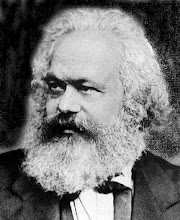
The Beard Theorem is a political theorem that relates to the Communist Party and its members. The Beard Theorem is a theory that suggests that the size of one's Beard, whether it be a puff, French Fork or Mutton Chop, has a direct correlation to the radicality of a person's Socialist views. If one was to have a large, beard, that person has a higher chance of being a communist revolutionary than one other person who has only as moustache, or worse: no facial hair at all. This theorem is proved by many of the communist Russian revolutionaries of the 1900's, those like Karl Marx, who has a massive, beard and, in accordance to the theorem, is a great communist. V.I. Lenin, the leader of the Russian Revolution, had a beard, yet it was not as profound, thus he is not as truly communist as Marx or Engels, as he has a relatively small beard, but it is still present and is truth of his communisity. Josef Stalin, the leader of the Communist Vanguard Party in Russia from the mid 1920's to 1952, has no beard, yet has a moustache. Stalin, in accordance to the theorem thus has very little Communist Blood in him, as he is a Stalinist, and a social fascist. Exceptions to the rule is most East Asian Communist leaders.
This article is licensed under the GNU Free Documentation License. It uses material from the Wikipedia article "The beard theorum". Link may die if entry is finally removed or merged.
0
comments
Thursday, 6 May 2010

Zoltan Lelkes, Docens, Dept. Chemical Engineering, Budapest University of Technology and Economics, Budapest, Hungary 1521
http://www.ch.bme.hu/Portal/MunkatarsakR
Subscribe to:
Posts (Atom)