0
comments
Saturday, 21 July 2012
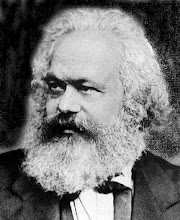
The hallowed halls of academia may have filled with a dizzying array of counter-culture fashion since the 1960s, but like its fellow fashion statement the corduroy jacket, the academic beard continues to hold fast to the faces of many an academic.
0
comments
Saturday, 21 July 2012
0
comments
Friday, 20 July 2012
0
comments
Saturday, 2 June 2012
0
comments
Saturday, 12 May 2012
They used to be seen as highly attractive and a symbol of
masculinity, but new research has found the beard may have fallen
out of favour.
Wellington anthropologist Barnaby Dixson has published his doctoral thesis
on the significance of the beard, and whether old theories about
their evolution still hold true.
Charles Darwin said that men evolved beards as a result of
sexual selection - theorising that women chose a partner based on a
man's facial fur.
0
comments
0
comments
Friday, 6 April 2012
Dr. Richard Ramsey
0
comments
Tuesday, 6 March 2012

Professor David Vocadlo
Canada Research Chair Tier II
Canada Research Chair in Chemical Glycobiology
Scholar of the Michael Smith Foundation for Health Research
E.W.R. Steacie Memorial Fellow
Department of Chemistry
Simon Fraser University
The Laboratory of Chemical Glycobiology
Glycobiology is the study of the structures and roles of carbohydrates in biology. Contrary to popular belief, carbohydrates are not simply energy sources but play many essential roles in cell and organismal biology. Various different types of carbohydrate building blocks are known and these can be linked together in various ways by carbohydrate processing enzymes. The resulting carbohydrate structures are attached to other molecules found in cells including proteins and lipids. The carbohydrate structures present on the resulting glycoconjugates continue to be uncovered as important factors in health and disease.
The laboratory for chemical glycobiology headed by Dr. Vocadlo is engaged in the study of; (i) carbohydrate processing enzymes that act on glycoconjugates, (ii) the development of chemical tools to both perturb the action of these enzymes as well as to monitor glycoconjugates, (iii) and the use of these chemical tools to gain new understanding as to how these enzymes and glycoconjugates mediate biological processes. To realize these aims we study the structures of glycoconjugates using various analytical approaches. We also synthesize substrates to study the specificities of carbohydrate processing enzymes and use the methods of physical organic chemistry and biochemistry to understand how they work to process glycoconjugates. Insights gained through such studies are used to design chemical probes of these enzymes, with a focus on enzyme inhibitors. These probes are validated in vitro, in cells, and in vivo as appropriate. A central objective is to create selective probes of carbohydrate processing enzymes that can be used to evaluate the roles of carbohydrate structures of interest in health and disease.
0
comments
Thursday, 2 February 2012
Dr Adam C Algar, Lecturer
School of Geography, University of Nottingham
0
comments
Sunday, 29 January 2012
0
comments
Saturday, 21 January 2012
0
comments
Tuesday, 17 January 2012

Lee J Stemkoski
Assistant Professor
Mathematics and Computer Science
Adelphi University
http://adelphi.edu/~stemkoski/
0
comments
Friday, 13 January 2012
Professor Steven Rawlings, 50, was found at the home of his best friend of more than 30 years, maths lecturer Dr Devinder Sivia, 49, on Wednesday.
Dr Sivia, from Southmoor, Oxfordshire, was arrested on suspicion of murder and released on police bail until April 18.
Today Prof Rawling's wife Linda Rawlings believed her husband's death was a 'tragic accident'.
The professor's older sister Linda Davey, 64, said: 'We can't think that there was any kind of fight. We can only assume that it was a terrible accident.'
Police confirmed this afternoon that a post-mortem had proved inconclusive and the matter might be a matter for a Coroner's inquest rather than a criminal court.
Police discovered the professor’s body after they were called about an ‘incident’ at Dr Sivia’s bungalow.
Further tests will be carried out over the next few weeks to discover the cause of death.
Det Supt Rob Mason, from Thames Valley Police's Major Crime Unit, said: 'A substantial amount of information is already in the public domain and we can confirm that the two individuals involved have been friends for over thirty years.
'I would emphasise that the police are investigating all potential circumstances that could have led to his death.
'We are mindful that ultimately the death may be a matter for a Coroner’s inquest rather than a criminal court and I would ask for patience from both the media and the public while we continue our investigation.
'Due to the post-mortem examination results proving inconclusive and further examinations being required, this has necessitated a lengthy bail date.'
A neighbour is said to have tried to save the dying man’s life by desperately pumping his chest. But minutes after officers arrived, Dr Sivia – who was dressed all in white – was led away in handcuffs after being arrested on suspicion of murder.
0
comments
Sunday, 8 January 2012
0
comments
Thursday, 5 January 2012
0
comments
Thursday, 8 December 2011

Welitom Rodrigues Borges
University of Brasília, Institute of Geosciences
0
comments
Friday, 4 November 2011

Dr Mattias Frey
Lecturer in Film
School of Arts, University of Kent
Dr Mattias Frey received his academic training in Heidelberg, Mannheim and Berlin as well as at Harvard University, where he earned his bachelor and doctoral degrees and taught in the Department for Visual and Environmental Studies. In 2008 he joined the University of Kent as Lecturer in Film Studies. In addition, he serves as Admissions Officer and as Co-ordinator for ERASMUS and Year Abroad programmes for the Film Studies Department.
http://www.kent.ac.uk/arts/staff/mattias_frey.html
0
comments
Saturday, 22 October 2011

Considering he talks about the marvels of the universe, Academic Beards has occasionally wondered why Professor Brian Cox sounds a little dull. Last night during his appearance on BBC2's QI came our lightbulb moment - the professor has no beard. No beard, no mumbling, no modulation of tone based on variation in beard/soup ratio. Cox, where's your beard?
0
comments
Wednesday, 5 October 2011

Behrang Mahjani, PhD Student
Division of Scientific Computing
Department of Information Technology
Uppsala University
http://www.it.uu.se/katalog/behbe124
He is working on models and methods for detecting multiple QTL-like loci.
0
comments
Monday, 12 September 2011

Frithjof Nungesser, M.A.
Karl-Franzens-Universität Graz
Institut für Soziologie / Department of Sociology
http://www-classic.uni-graz.at/sozwww/personal/nungesser/